

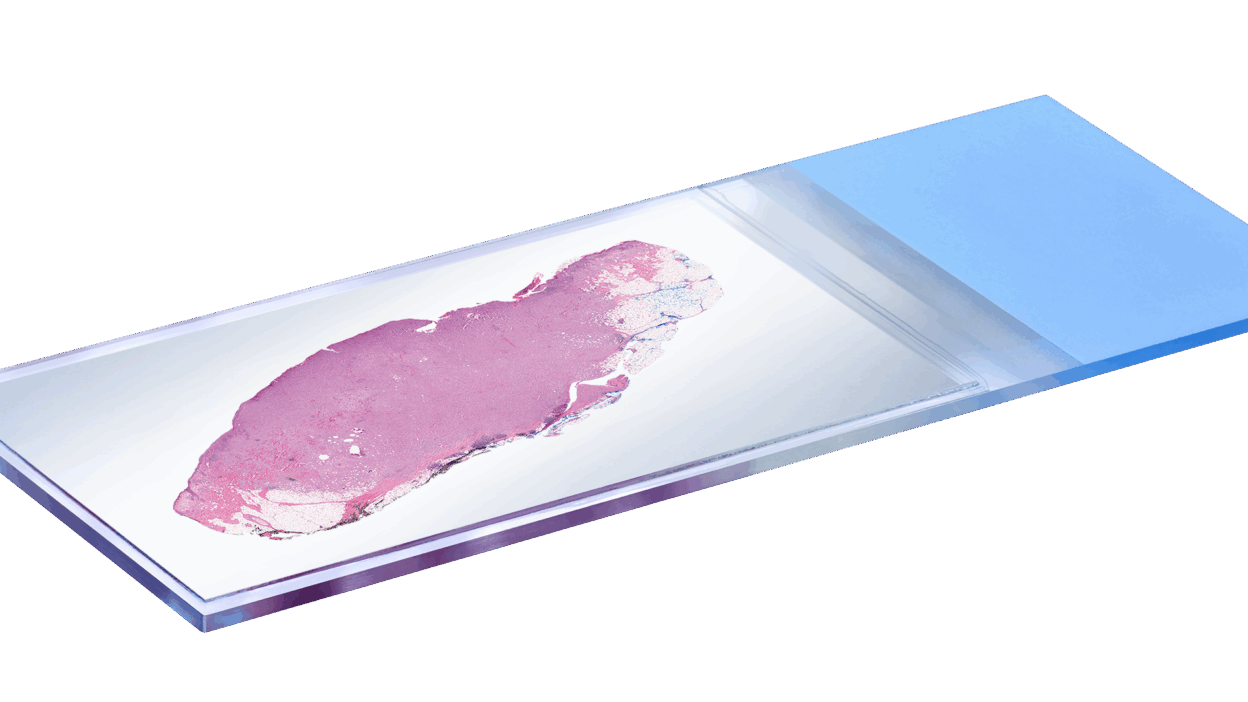
In recent years, digital transformation has been discussed across many areas of healthcare, and pathology has had a major place in that discussion, especially as artificial intelligence tools and medical image analysis technologies have advanced.
The usual questions are often asked:
- Does digitization make diagnosis faster?
- Does it save cost?
- Does it improve accuracy?
But from what I have seen in the field, especially in resource-limited settings, these may not be the most important questions. In practice, digital transformation does not only answer these questions. It raises a deeper and more urgent one: “Can we continue without it?”
Digital transformation is not a luxury. It is a necessity
In many laboratories I have worked with, the problems are less technical than organizational and structural:
- Slides are lost between departments because there is no archiving system.
- Reports are delayed because cases accumulate and filtering them is difficult.
- Hundreds of specimens each week depend entirely on one or two specialists.
- Documentation and review are often insufficient, making errors possible and the losses sometimes severe.
These problems cannot be solved simply by hiring more staff, or by adding one new device here and there. They are signs of a system approaching collapse.
This is where digital transformation matters, not because it is more modern or more polished, but because it can help keep the system from failing.
What does digital transformation actually change?
- Remote diagnosis: a slide can be shared digitally with a pathologist in another governorate or another country within minutes.
- Automated triage and classification: artificial intelligence can sort cases by priority and direct the pathologist’s attention.
- Shorter report turnaround time: digital viewing and search tools can reduce diagnostic time.
- Protection against data loss: digital archiving preserves every item of information so it can be retrieved later.
- Restoring trust: when every step is documented, trust can return between the doctor, the patient, and the health system.
What about costs?
It is natural to ask: “Is this expensive?”
Yes, at the beginning. But the real cost is not only in the equipment. It is in lost time, delayed diagnosis, and errors discovered only after it is too late.
In many cases, lower-cost solutions can be built with open-source tools and cooperation between multidisciplinary teams.
Bottom line: this is not technical comfort
Digital transformation in pathology should not be judged only by speed or cost reduction.
In some cases, it may not be faster. It may not be cheaper. It may not be more accurate.
But in our settings, it is the only available option for preserving diagnostic quality and preventing complete system failure.
This transformation is not meant to replace people. It is meant to support them, enable them, and protect them from collapsing under pressure.
Open question:
How do you see the future of pathology in our region? Do you think laboratories are ready for this kind of transformation, or are the technical, financial, and administrative barriers still too large to solve easily?