

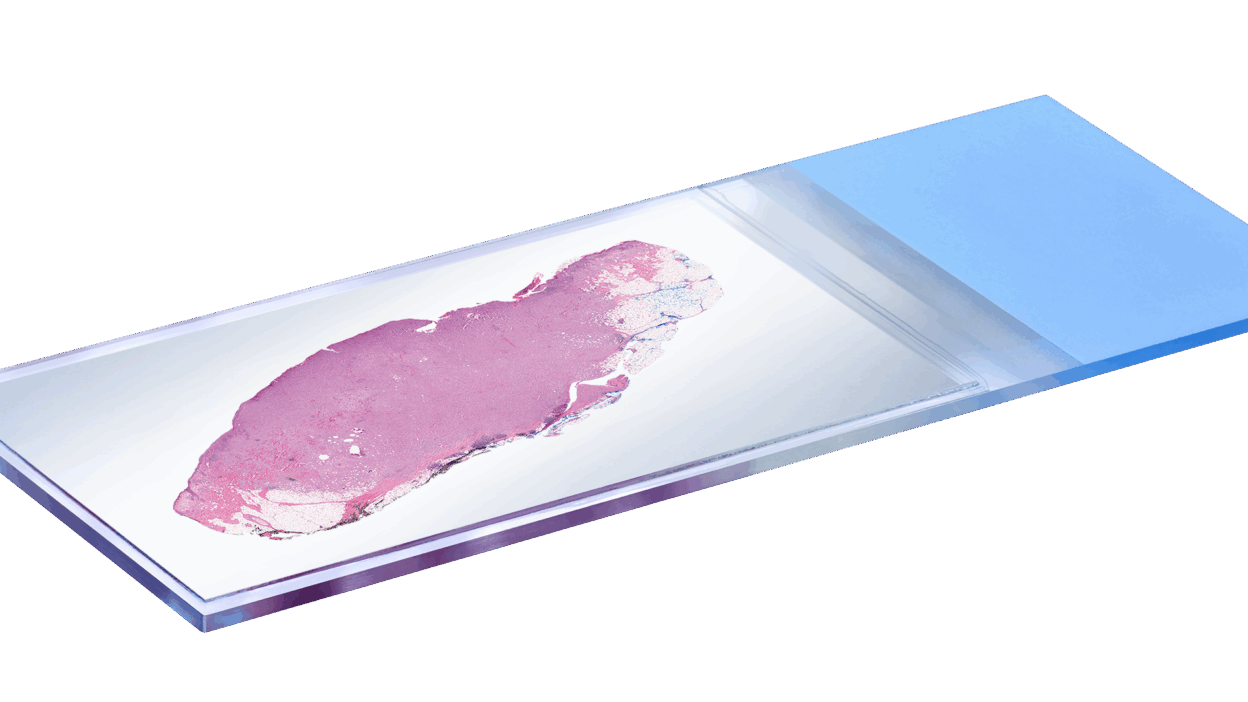
In recent years, there has been much discussion about digital transformation across various healthcare fields, and pathology has been a significant part of these discussions, especially with the advancement of artificial intelligence tools and medical image analysis techniques.
The traditional questions often posed are:
- Does digitization make diagnosis faster?
- Does it save costs?
- Does it increase accuracy?
However, from my experience in the field, especially in resource-limited settings, these questions may not be the most critical. In fact, digital transformation not only answers these questions but poses a deeper and more critical one: “Can we continue without this transformation?”
Digital Transformation is Not a Luxury… It’s a Necessity
In many laboratories I’ve worked with, the challenges are less technical and more organizational and structural:
- Loss of slides between departments due to lack of archiving.
- Delayed report issuance due to case backlog and difficulty in filtering.
- Complete reliance on one or two specialists to diagnose hundreds of samples weekly.
- Significant lack of documentation and review, making errors probable and losses tragic.
These are not problems that can be solved merely by increasing staff numbers or adding a new device here or there. They are indicators of a system approaching the brink of collapse.
This is where the importance of digital transformation lies, not because it is more modern or “elegant,” but because it is a tool to save the system from collapse.
What Does Digital Transformation Actually Change?
- Enabling Remote Diagnosis: Digital slides can be shared with a physician in another province or country within minutes.
- Automating Sorting and Classification: AI can prioritize cases and direct the pathologist’s attention.
- Accelerating Report Turnaround Time: Digital viewing and search technologies reduce diagnostic time.
- Preventing Data Loss: Digital archiving preserves all information for later retrieval.
- Rebuilding Trust: When every step is documented, trust is restored between the physician, patient, and system.
What About Costs?
It’s natural to ask: “Is this expensive?”
Yes, initially. However, the true cost is not in the equipment, but in lost time, delayed diagnoses, and errors that are only discovered too late.
Often, low-cost solutions can be found using open-source tools and collaboration between multidisciplinary teams.
Conclusion: It’s Not a Technical Luxury
Digital transformation in pathology should not be measured solely by performance speed or cost reduction.
In some cases, it may not be faster. It may not be cheaper. It may not be more accurate.
But in our environments, it is the only available option to maintain diagnostic quality and prevent complete system collapse.
This transformation does not aim to replace humans, but to support them, empower them, and protect them from collapsing under pressure.
🔍 Open Question:
How do you see the future of pathology in our region? Do you believe laboratories are ready for this type of transformation? Or are the technical, financial, and administrative obstacles still too great to be easily overcome?