

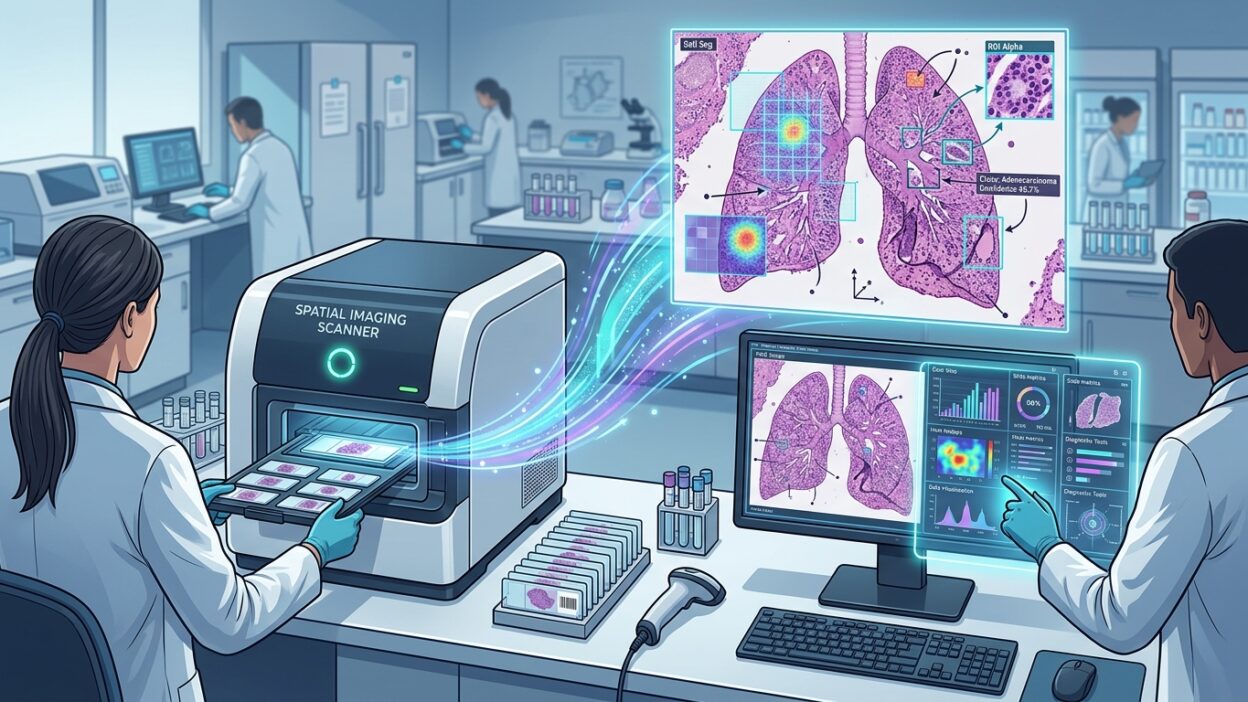
A community laboratory ahead of larger centers
Digital pathology is usually discussed in the context of large academic centers. South Bend Medical Foundation in Indiana, a nonprofit laboratory founded in 1912, offers a different model. The laboratory moved from academic curiosity to full practical use and now signs out cases digitally with dermatopathologists hundreds of miles away.
Dr. Eric Forschetti, a pathologist and advocate for digitization, told the story in an interview with The Pathologist. It began in 2017 with the purchase of the first slide scanner. The project lost momentum after the supportive chief executive left. The scanner sat on the margins for years, used only for tumor board cases.
The turning point: executive leadership that believed in the project
The real shift came three years ago, when a new president arrived after working at the University of Louisville, where digital pathology was already in use. That executive support changed the equation. Before then, the project was a recurring topic with little commitment. After that, it became an operating plan.
The chief operating officer summed up the position in one sentence: he did not want to be the first through the door, but he was comfortable being second. That practical mindset fits many community laboratories.
Recruitment and succession: a financial argument that is hard to ignore
Forschetti notes that job applicants now ask directly about digital diagnostic systems during interviews. A new generation of pathologists expects the laboratory to be digital. Laboratories that do not keep up will find it harder to attract skilled staff.
This is not a luxury issue. The current generation of pathologists is approaching retirement, and their replacements are looking for a modern work environment.
Cost and culture: two real barriers
Forschetti acknowledges that cost is the first barrier. The initial investment is large, and small for-profit laboratories may struggle to justify it. The second barrier is harder: cultural resistance. Most pathologists in community practice want systems that are reliable and simple. They already carry a full workload, and adding a new technology with a learning curve can feel like another burden.
The story Forschetti tells about the most senior pathologist in the group captures this well. The physician said, literally: “I will never do this. As soon as you start diagnosing digitally, I will retire.” Months after the system was installed, the same physician was angrily complaining that a slide had not yet been scanned because he needed it digitally. Change happens gradually, then all at once.
Remote subspecialty expertise
One practical use case is dermatopathology. The laboratory’s dermatopathologist moved to California. Instead of searching immediately for a local replacement, the same physician continued signing out skin cases digitally from hundreds of miles away. That kind of distributed practice was nearly impossible with glass slides alone.
From consumer to developer
Forschetti is interested in the idea that community laboratories can help develop AI tools. He met a local engineer interested in computer vision, and a nearby university has computer science students who want to apply their work in healthcare.
The first project: an algorithm that reviews lymph node slides and identifies areas that may contain tumor metastases. The aim is not to make the diagnosis, but to direct the pathologist’s attention to the most relevant areas first.
This model deserves attention. Community laboratories have real clinical data and practical testing environments. Staying only as consumers of ready-made tools leaves an opportunity unused.
Practical advice
Forschetti closes by saying the experience was a whole-team effort: executive leadership and the laboratory staff who run scanning every day. His own role was advocacy and steady pressure. His advice to other laboratories: do not wait for a direct financial return on every case. The broader question is what opportunities digital pathology opens that are not available today.
Source: The Pathologist, Going Digital in Community Pathology