

Imagene AI and Daiichi Sankyo Partnership: Multimodal AI for Tumor Biomarker Discovery
The Agreement at a Glance
Imagene AI, a company specializing in AI for medical applications, announced a strategic collaboration with Daiichi Sankyo, a Japanese pharmaceutical company. The agreement aims to develop biomarker discovery technologies using multimodal AI in oncology.
The partnership combines Imagene’s OI Suite platform, powered by CanvOI technology and an extensive multimodal clinical database, with Daiichi Sankyo’s expertise in oncology drug development.
What Exactly Does Imagene’s Technology Do?
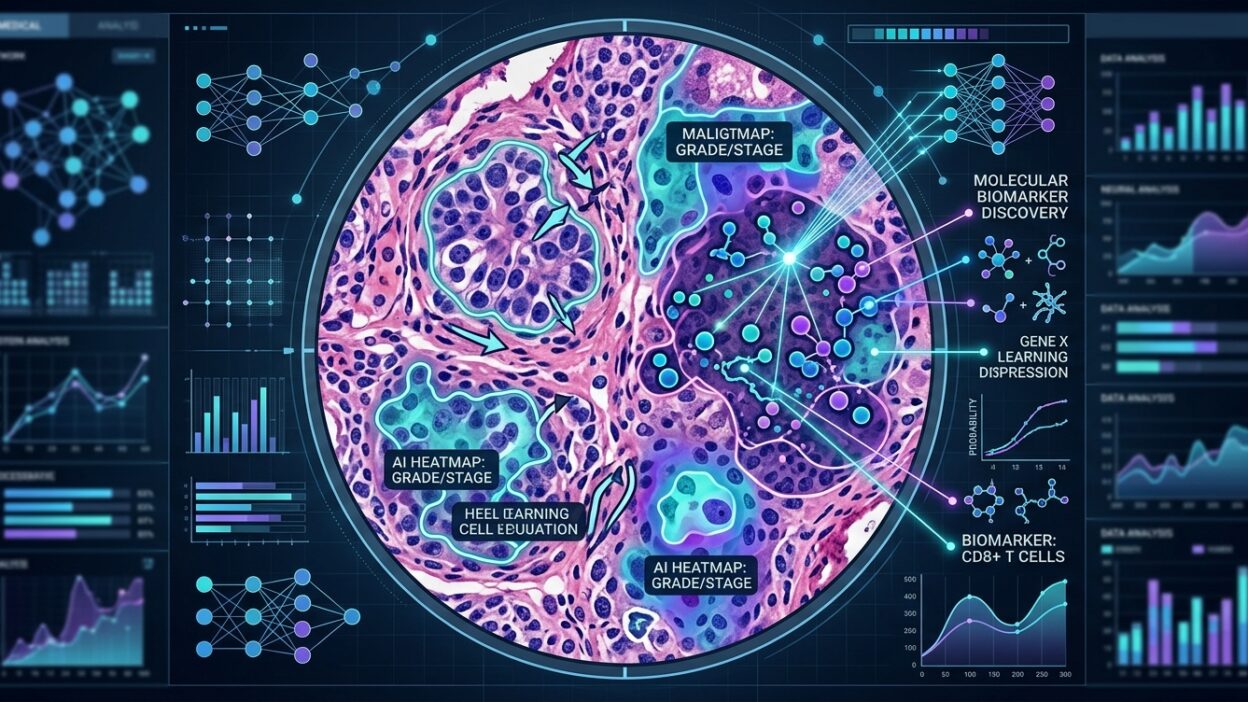
The idea is simple yet powerful: instead of sending tissue samples for complex genomic analyses that take weeks, Imagene’s platform extracts molecular information directly from routine Hematoxylin and Eosin (H&E) stained tissue slides.
The technology relies on Computer Vision and Deep Learning to analyze whole slide images. The result? Real-time molecular identification without the need for additional tissue, specialized equipment, or long processing times.
Why Is This Partnership Important?
Accelerating Drug Development
More accurate biomarkers mean better patient stratification during clinical trials. When patients who will respond to a specific treatment can be identified with greater precision, trial durations shrink, and outcomes improve.
Reducing the Need for Costly Molecular Tests
Current genomic analyses, such as Next-Generation Sequencing (NGS), require significant time and budget. If AI can extract similar molecular information from a routine tissue slide, it saves pathologists’ time and reduces costs.
Integration with ADC Drugs
Daiichi Sankyo has a robust portfolio of Antibody-Drug Conjugates (ADCs). These drugs require precise biomarkers to identify suitable patients. This is where Imagene comes in, providing these biomarkers through tissue slide analysis.
Multimodal AI: What’s the Difference?
Most AI solutions in pathology operate on a single data modality: either slide images, genomic data, or clinical data. Imagene combines these different modalities into a single model.
The OI Suite platform utilizes an extensive clinical database that integrates digital slide images, genomic data, and clinical information. This integration allows for the discovery of patterns that no unimodal analysis can detect.
The company’s Composite Continuous Scoring system provides a continuous assessment of tumor status instead of a simple binary classification (positive/negative). This approach yields more precise information about disease severity and the likelihood of treatment response.
Impact on Digital Pathology Practice
This partnership reflects a broader trend in Digital Pathology: the shift of major pharmaceutical companies towards relying on AI in early stages of drug development.
For pathologists, this means that the routine H&E slides they examine daily could become a source of molecular information that previously required separate, costly tests. This transformation is not theoretical; it is accelerating with every new partnership between technology and pharmaceutical companies.
The Companies at a Glance
Imagene AI is based in Miami, Florida. It develops AI technologies for molecular extraction from pathology images. Its applications include diagnostic, predictive, and prognostic biomarkers across multiple cancer types.
Daiichi Sankyo is a venerable Japanese company with over 125 years of experience in pharmaceutical manufacturing. It strategically focuses on oncology and invests heavily in Antibody-Drug Conjugate technologies and innovative medicines.
What Was Not Announced?
The joint statement did not disclose the financial terms of the agreement. It also did not specify the tumor types targeted in the initial phase of the collaboration, nor the expected timeline for the first results.
These details will gradually become clear as the project progresses. What is important now is that a partnership between a specialized AI company and a pharmaceutical company of this size sends a clear signal: Digital Pathology is no longer just an academic field, but has become an integral part of the drug development pipeline itself.
Conclusion
Imagene’s partnership with Daiichi Sankyo is not just a routine collaboration agreement. It represents an ongoing transformation in how drugs are discovered and developed. When AI can analyze a routine tissue slide and extract molecular information that previously took weeks and exorbitant costs to obtain, it changes the equation for tumor diagnosis and treatment.
For pathologists, the message is clear: engaging with digital slide images and familiarizing oneself with available AI tools has become a professional necessity, not an option.